Quick answer
For full Georgia sun, there is no single material that is always coolest or best. Light colors generally feel more comfortable than dark colors within the same product family. Wood, composite, and PVC can all become hot. Composite and PVC reduce staining and sealing, while wood offers natural appearance but requires more maintenance. Compare specific product lines, outdoor samples, traction, fade protection, warranty, and shade opportunities before choosing.
Start With the Reality: All Decking Can Get Hot
Direct sun heats outdoor surfaces regardless of material. Air temperature is only part of the experience; a board exposed to hours of afternoon sun can be much hotter than the surrounding air.
Color is one of the most practical variables. Dark browns, charcoal tones, and deep reds tend to absorb more solar energy than lighter tans and grays. Texture, board density, airflow, cloud cover, and product-specific technology also influence comfort.
Wood Decking in Full Sun
Wood is familiar underfoot and its temperature depends on species, color, moisture, and finish. Lighter natural tones may feel more comfortable than dark solid stains, but unprotected wood weathers under ultraviolet exposure.
Full sun can accelerate fading, checking, raised grain, and finish breakdown. Periodic cleaning and protective staining are part of maintaining appearance and moisture resistance. A dark finish may look attractive while increasing heat absorption.
Choose wood when natural character and lower initial material cost outweigh the maintenance commitment. Plan future deck staining when selecting the original color.
Composite and PVC Decking in Full Sun
Composite and PVC boards are popular because they resist rot and do not require routine staining. Product lines differ substantially in core material, cap, color, texture, fade resistance, expansion, scratch response, and heat performance.
Some manufacturers offer heat-mitigating technology designed to keep selected boards cooler than their conventional products or similarly colored alternatives. Manufacturer guidance still warns that boards can become hot during prolonged direct exposure, especially in darker colors.
Review warranties for fading, staining, and installation. A long warranty does not replace correct joist spacing, ventilation, gapping, fasteners, and care.
Think About Bare Feet, Children, and Pets
A deck used primarily in shoes may have different comfort requirements from a pool-adjacent surface or a space used by young children and pets. Consider the walking path from the door, seating areas, stair treads, and places where someone may stand still.
On extremely hot days, use shade, footwear, outdoor rugs approved by the decking manufacturer, and caution with exposed skin. Avoid rubber-backed mats or accessories when the manufacturer warns they may discolor or react with the surface.
Traction also matters. Compare dry and wet slip characteristics for the exact product, especially near pools, hose areas, and uncovered stairs.
Use Design to Reduce Heat Instead of Relying Only on Boards
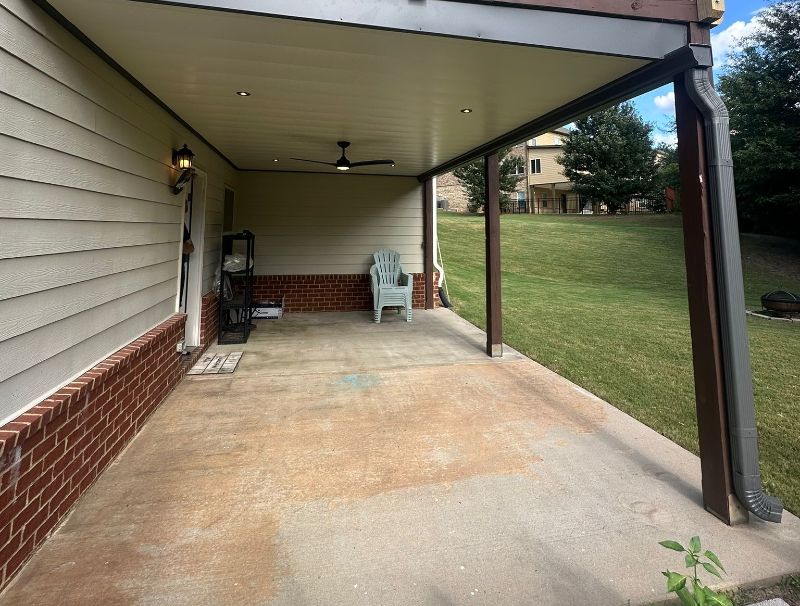
Material selection cannot change the path of the sun. A thoughtful layout can place dining and seating where the home or tree canopy provides afternoon relief. Other options include a pergola for partial shade, a covered deck, or a combination of covered and open zones.
Ceiling fans improve air movement under a roof but do not reduce the temperature of an uncovered board. Planting can provide future shade, but roots, leaves, and moisture should be planned so they do not create maintenance and drainage problems around the deck.
Full-Sun Decking Decision Guide
| Priority | What to examine |
|---|---|
| Cooler color | Compare lighter options within each manufacturer’s product family outdoors. |
| Low maintenance | Review capped composite and PVC cleaning, warranty, fade, and stain guidance. |
| Natural appearance | Compare wood species and understand the required finish schedule. |
| Barefoot use | Test samples in sun and compare traction and approved heat-mitigating lines. |
| Long-term value | Compare installed cost, maintenance, expected service, and warranty terms. |
| Comfort | Plan shade, furniture layout, airflow, and exposure alongside the decking. |
How to Choose a Specific Product
- Map the hours of direct sun and the hottest exposure.
- Identify whether people will use the space barefoot.
- Set maintenance and budget priorities.
- Compare exact product lines and colors, not broad categories alone.
- Place samples outside in the planned orientation.
- Review installation, care, warranty, and traction information.
- Coordinate railings, stairs, trim, and shade features.
Upperdeckz can compare wood and composite deck options for your home’s exposure, layout, and outdoor-living goals.
Frequently asked questions
Is composite decking too hot for Georgia?
Composite can become hot in direct sun, especially in dark colors. Many homeowners still choose it successfully by selecting lighter colors, comparing heat-mitigating product lines, testing samples, and adding shade.
What deck color stays coolest?
Lighter colors generally absorb less heat than darker colors within comparable products, but formulation and texture also matter. Test the exact samples in the planned sun exposure.
Does wood stay cooler than composite?
Not in every situation. Species, color, moisture, finish, product formulation, and exposure affect temperature. Compare actual products and colors rather than relying on a category-wide claim.
Can a pergola keep the deck cooler?
A pergola can create partial, patterned shade, reducing direct sun in selected areas. Shade changes with slat orientation, spacing, height, and sun angle.
Does composite fade in full sun?
Modern capped products are designed to resist fading, but performance and warranty thresholds vary by product line. Review the exact manufacturer’s warranty and color guidance.
Sources and further reading
Compare decking where it will be installed
Upperdeckz can help you compare exact materials, colors, maintenance, railings, and shade options for a deck exposed to Georgia sun.
Request a Free Estimate Call 678-910-4046