Quick answer
For planning purposes, many wood decks in Georgia need staining or sealing about every two to four years, but that is not a fixed rule. High sun, heavy foot traffic, frequent rain exposure, tree debris, poor drainage, and the previous coating can shorten the interval. Sheltered areas may last longer. Inspect the deck annually and recoat when the product and surface condition indicate it—not only when the color looks faded.
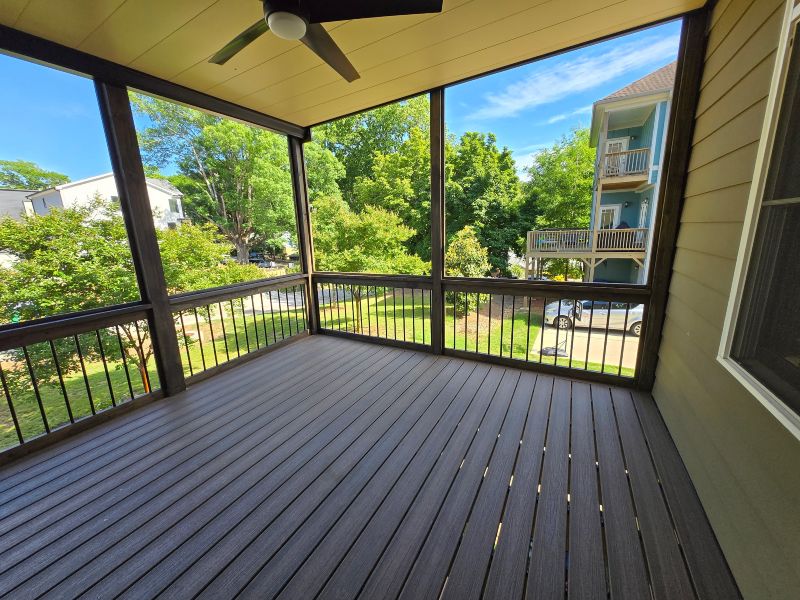
Why There Is No Universal Staining Schedule
“Every two years” is easy advice to remember, but it ignores the conditions on the actual deck. A south- or west-facing surface in open sun may weather much faster than a covered or shaded area. Horizontal boards usually receive more water and ultraviolet exposure than vertical rails.
The coating itself matters. Penetrating stains, film-forming products, semi-transparent finishes, and solid-color coatings age differently and have different preparation requirements. Applying a new product over an incompatible old coating can cause early failure even when the timing seems right.
The best schedule combines an annual visual check with the manufacturer’s written guidance for the exact finish used.
Signs It May Be Time to Restain the Deck
- Color has become noticeably uneven in exposed traffic areas.
- Water darkens and absorbs into bare-looking wood instead of being managed by the finish.
- The previous coating is peeling, flaking, or wearing away.
- High-traffic boards feel rough or show raised grain and checking.
- Rails, stair treads, and deck edges have lost protection at different rates.
- Cleaning reveals widespread coating failure rather than surface dirt alone.
Fading does not always mean the protective performance is gone, and a dark or dirty appearance does not always mean more stain is needed. Clean and evaluate the surface before selecting the next step.
Georgia Conditions That Affect Deck Stain
Metro Atlanta weather places several demands on exterior wood. Strong sun breaks down color and coatings. Humidity and rainfall slow drying. Pollen, leaves, and shaded tree cover hold organic material against the surface. Repeated roof or gutter runoff can soak one section long after the rest of the deck is dry.
Areas that stay damp deserve more than another coat. Correct clogged gaps, leaking gutters, downspout discharge, planters without airflow, and landscaping that traps moisture. Coating over a water-management problem may hide the evidence temporarily without protecting the wood.
Preparation Determines How Long Deck Stain Lasts
A finish can only perform as well as the surface beneath it. Proper preparation may include removing debris, cleaning, allowing adequate drying, stripping incompatible or failing coatings, sanding selected areas when appropriate, and repairing damaged boards before application.
Moisture content, surface temperature, air temperature, direct sun, humidity, and rain forecast all matter. The finish manufacturer’s acceptable application range should control. Rushing because the weekend is convenient can lead to lap marks, slow curing, poor penetration, or peeling.
How Soon Should a New Wood Deck Be Stained?
New pressure-treated lumber may contain enough moisture to interfere with some finishes. The correct waiting period is not a universal number of weeks because storage, treatment, weather, board thickness, and sun exposure affect drying.
Use the stain manufacturer’s preparation and moisture requirements. A professional can evaluate the surface and, when appropriate, measure moisture rather than relying only on appearance. Waiting too little can reduce penetration; waiting far too long without protection can allow unnecessary ultraviolet and moisture weathering.
If the deck is newly built by another contractor, keep material and finish records so the future maintenance product is easier to select.
What to Do Between Staining Projects
- Sweep leaves, pine straw, pollen, and dirt before they build up.
- Keep gaps between boards open for drainage.
- Move planters and outdoor rugs periodically and check for trapped moisture.
- Clean spills before they become difficult stains.
- Maintain gutters and direct downspouts away from the deck and supports.
- Check boards, rails, stairs, and fasteners while cleaning.
- Use cleaners and pressure settings appropriate for the wood and coating.
Aggressive pressure washing can erode soft wood fibers and create a rough surface. More force is not automatically better preparation.
What Professional Deck Staining Should Include
A professional scope should identify the existing coating, surface condition, cleaning and preparation steps, repair needs, selected product, color, application method, weather window, and areas included—boards, rails, spindles, stair treads, risers, and trim.
Upperdeckz provides deck cleaning, preparation, staining, and sealing for suitable wood decks in Marietta and Metro Atlanta. If damage is discovered during preparation, the team can also explain whether deck repairs should be completed first.
Frequently asked questions
Is staining a deck every two years necessary?
Not always. Two years can be a reasonable planning interval for exposed decks, but the actual timing depends on the finish, preparation, sunlight, moisture, traffic, and surface condition.
Can I put new stain over old stain?
Sometimes, but only when the products are compatible and the old coating is sound and properly prepared. Peeling, film-forming, or unknown coatings may require stripping or more extensive preparation.
Should a new pressure-treated deck be stained immediately?
Not automatically. The wood and selected finish must meet the manufacturer’s moisture and preparation requirements. New treated lumber may need time to dry before some products are applied.
Will stain stop deck rot?
No. Stain can help manage moisture and ultraviolet exposure on sound wood, but it cannot restore decayed material or correct trapped water, failed flashing, or structural damage.
What is the best weather for deck staining?
Use the coating manufacturer’s temperature, surface, humidity, and rain-window requirements. Mild, dry conditions without intense direct sun are often easier, but product instructions control.
Give your wood deck the preparation it needs
Upperdeckz can assess the existing finish, clean and prepare suitable wood, address repair concerns, and recommend a staining approach for your deck’s exposure and condition.
Request a Free Estimate Call 678-910-4046