Quick answer
Repair makes sense when damage is isolated and the structure remains sound. Resurfacing replaces the walking surface and often railings while retaining a verified, compatible frame. Full replacement is usually the safer value when decay, movement, improper connections, widespread corrosion, failing footings, or major layout changes affect the structure. The decision should follow an in-person evaluation rather than the appearance of the deck boards alone.
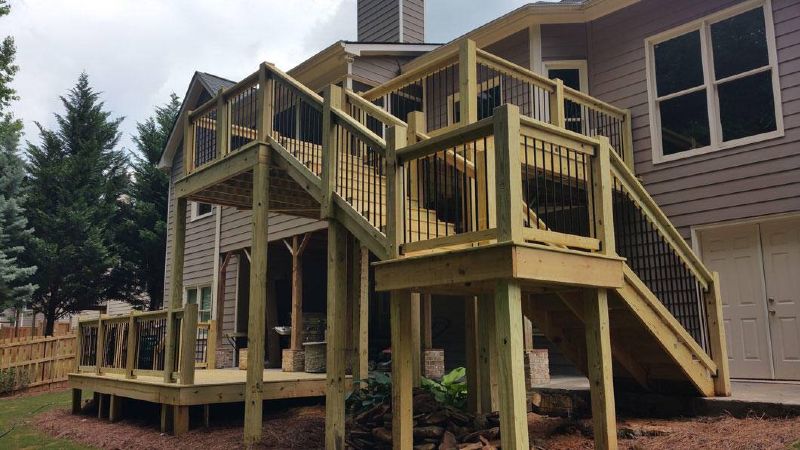
What Repair, Resurfacing, and Replacement Mean
Targeted deck repair
Repair addresses specific problems: a limited number of damaged boards, a loose rail section, isolated stair damage, or localized framing deterioration. The surrounding structure must still be capable of performing safely.
Deck resurfacing
Resurfacing removes the decking and may replace railings while keeping all or much of the existing frame. It can be a good way to upgrade from wood to composite, but only after the frame, spacing, flashing, hardware, and geometry have been checked.
Full deck replacement
Replacement removes the surface and structural frame so the new deck can be designed for current conditions, desired materials, and the way the homeowner wants to use the space. It may also be the practical route when repair labor would be extensive or when a cover, expansion, or major stair change requires a different structure.
The Structure Decides More Than the Surface
A deck can look weathered yet remain repairable, or it can look acceptable on top while concealed connections have serious problems. A useful evaluation works from the ground up and from the house outward.
- Footings and posts for settlement, decay, damage, and connection issues
- Beams and joists for rot, splitting, sagging, unauthorized cuts, or inadequate support
- The ledger and flashing where an attached deck meets the home
- Hangers, bolts, screws, connectors, and signs of corrosion
- Guardrails, handrails, stairs, and landings for movement or damage
- Deck boards for soft areas, fastener failure, warping, and widespread wear
NADRA’s deck evaluation resources emphasize that stairs, supports, framing, ledgers, surfaces, and guards should all be examined. A surface-only assessment misses the components most important to safety.
When a Targeted Deck Repair May Be Enough
Repair is most appropriate when the problem has a clear boundary and the surrounding structure is in serviceable condition. Examples include a few damaged boards, a localized railing issue, isolated stair tread damage, or a small framing area affected by a known water source that can also be corrected.
The repair should address the cause, not just the symptom. Replacing a soft board without correcting trapped water, failed flashing, or a gutter discharge problem can lead to the same damage returning.
Upperdeckz provides deck repair evaluations in Marietta and Metro Atlanta for boards, framing, stairs, railings, and structural concerns.
When Deck Resurfacing Makes Sense
Resurfacing can work when the deck frame is structurally sound, the layout still meets the homeowner’s needs, and the joist spacing and flatness are compatible with the selected decking. Removing the old boards creates an opportunity to inspect the top of joists, flashing, hangers, fasteners, and areas that were previously hidden.
Frame corrections may still be needed. Joists can require reinforcement, localized replacement, blocking, or adjustment before composite boards are installed. Railings and stairs must also be evaluated as complete systems rather than automatically reused.
Signs Full Deck Replacement May Be the Better Choice
- Widespread rot in joists, beams, posts, or the ledger
- Movement or sagging that involves multiple structural components
- Improper or deteriorated house attachment
- Failing footings or significant settlement
- Extensive corrosion in connectors and fasteners
- A layout that no longer works and would require major structural alteration
- A proposed roof, enclosure, hot tub, or other load the existing deck was not designed to support
Repeatedly paying for isolated repairs can be poor value when the deck is deteriorating as a system. Replacement allows the structure, drainage, stairs, railings, and layout to be planned together.
What Not to Do With an Aging Deck
Do not assume fresh stain or new boards make a deck structurally safe. Finishes improve appearance and help protect appropriate wood surfaces; they do not repair a compromised ledger, undersized beam, loose guard post, failing footing, or corroded connector.
Avoid adding a roof, spa, outdoor kitchen, or heavy feature until the supporting structure has been evaluated for that specific load. Do not rely on nails alone at critical connections when approved structural hardware is required.
If the deck shifts, pulls away from the house, has visibly failing supports, or feels unsafe, stop using the affected area and arrange an evaluation. General online guidance cannot determine the capacity of an individual structure.
How Upperdeckz Evaluates the Best Path Forward
The process begins with the problem you noticed and how you want to use the deck going forward. The visible condition, age, layout, material, and access provide context, but the frame and connections determine whether repair or resurfacing is responsible.
When more than one path is practical, the comparison should include immediate scope, expected remaining life, maintenance, material compatibility, and future plans. A smaller repair can be right for an otherwise solid deck. A rebuild can be better when it prevents paying twice for a structure near the end of its useful service.
Review our related guide on warning signs of an unsafe deck or request an on-site assessment.
Frequently asked questions
Can only the deck boards be replaced?
Yes, when the existing frame is structurally sound, properly connected, adequately flashed, reasonably flat, and compatible with the new decking. The old boards should be removed so hidden conditions can be inspected.
Is deck resurfacing the same as deck repair?
Not exactly. Repair addresses isolated damage. Resurfacing replaces most or all of the walking surface and may include new railings while retaining a verified frame.
Can stain fix soft or rotted deck boards?
No. Stain is a protective finish for suitable wood. Soft, decayed, or structurally damaged material must be evaluated and replaced as appropriate.
When is a full rebuild more cost-effective?
A rebuild may offer better value when structural damage is widespread, repeated repairs are accumulating, the layout needs major changes, or new loads and features require a different structure.
Who should inspect an older deck?
NADRA recommends a knowledgeable deck builder or qualified inspector with appropriate experience. An in-person evaluation is necessary because deck condition cannot be confirmed from general symptoms alone.
Sources and further reading
Find out what your deck actually needs
Upperdeckz can evaluate the visible surface, framing, stairs, railings, and connections, then explain whether targeted repair, resurfacing, or replacement is the most responsible path.
Request a Free Estimate Call 678-910-4046