Quick answer
Stop using a deck or affected area if it is pulling away from the house, visibly sagging, supported by failing posts or footings, or moving enough to feel unstable. Soft framing, loose railings, damaged stairs, corroded hardware, and water damage are also warning signs. A visual homeowner check can identify concerns, but it cannot confirm structural capacity; older or questionable decks should be evaluated in person.
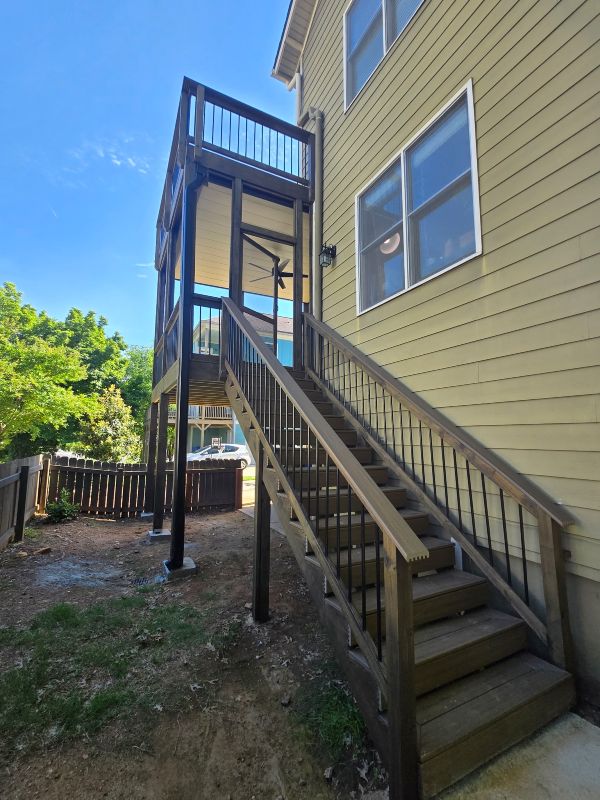
Warning Signs That Need Prompt Attention
The following conditions should not be treated as cosmetic until a knowledgeable professional confirms otherwise:
- The deck pulls away from the house. A widening gap, displaced flashing, or movement at the ledger can indicate a critical connection problem.
- Posts, beams, or joists are visibly decayed. Soft wood, crumbling fibers, fungal growth, or deep damage can reduce capacity.
- The deck sags or feels unusually bouncy. Movement may point to framing, support, connection, or span issues.
- Footings or posts have shifted. Leaning posts, settlement, soil movement, or damaged bases can affect the structure above.
- Important connectors are badly corroded or missing. Rust, incompatible metal, and improvised fasteners deserve evaluation.
- Guardrails move during ordinary use. Loose posts or rails can create a fall hazard and may indicate weak framing connections.
- Stairs, stringers, or landings are damaged. Cracks, movement, decay, and missing handrails deserve prompt correction.
- Multiple deck boards are soft or no longer hold fasteners. Widespread surface failure can point to prolonged moisture and framing damage below.
- Water staining or softness appears at the house connection. Failed flashing can damage the ledger and the wall assembly.
- Fasteners repeatedly back out or components keep shifting. Recurring movement suggests that simply tightening the visible hardware may not address the cause.
If any of these conditions are obvious, limit access and schedule a professional deck repair evaluation.
Loose Railings and Damaged Stairs Are Safety Problems
A guard or handrail should not feel loose during ordinary use. Movement at posts, cracked connections, missing balusters, or large openings can create a fall hazard. Tightening a visible screw may not solve a failed internal connection.
Check stairs for cracked stringers, loose treads, inconsistent movement, deteriorated landings, and handrails that do not provide a reliable grip. The bottom of exterior stairs is especially vulnerable when wood remains close to soil, mulch, or standing water.
Lighting also matters. Dark stair transitions, changes in level, and poorly visible edges increase trip risk even when the structure is sound.
Surface Damage That Can Point to Deeper Trouble
Cracked, splintered, cupped, or soft deck boards need attention, but their meaning depends on the cause and extent. One damaged board may be a localized repair. A pattern of soft boards near the house, under planters, or below roof runoff can indicate a recurring moisture problem.
Look for fasteners that repeatedly pop up, boards that no longer hold screws, and discoloration that remains wet long after surrounding areas dry. Surface symptoms should lead to an inspection of the framing directly below them.
Ledger Gaps, Failed Flashing, and Water at the House
The ledger is the board that connects many attached decks to the home. Its fasteners, flashing, and relationship to the house structure are critical. Warning signs can include a visible gap, water staining, soft wood, damaged siding, loose fasteners, or interior moisture near the attachment.
The American Wood Council’s deck construction guide calls for corrosion-resistant flashing at ledger connections to wood-framed walls. Flashing must direct water away rather than trapping it against the house.
Do not seal a visible gap with surface caulk and assume the connection is repaired. The cause and condition behind the ledger must be evaluated.
A Safe Homeowner Deck Check
Without crawling into unsafe areas or dismantling the deck, walk around it in daylight and note visible changes. NADRA’s consumer resources recommend looking at connections, railings, stairs, structural components, decay, and corrosion.
- View posts from several angles for leaning or movement.
- Look beneath the deck for water staining, damaged framing, or missing hardware.
- Check whether guards and handrails move during light ordinary pressure.
- Look for soft areas, loose boards, protruding fasteners, and trip hazards.
- Notice where gutters, downspouts, planters, and landscaping hold moisture.
- Document changes with photos so progression is easier to explain.
Do not climb on unstable supports, remove structural fasteners, or perform a “load test” by gathering people on a questionable deck.
When Should You Stop Using the Deck?
Stop using the deck or isolate the affected area when there is active separation from the house, visible support failure, substantial sagging, severe rail or stair instability, or movement that suggests the structure is not behaving normally. Keep children, pets, and guests away until it is evaluated.
For less dramatic concerns—such as an isolated soft board or early railing movement—avoid the affected area and schedule an assessment promptly. Small visible symptoms can be the easiest time to correct a developing problem.
No article can declare a particular deck safe. Structural condition, capacity, code compliance, and repair scope require an in-person assessment.
What a Professional Deck Evaluation Covers
A professional evaluation should consider the deck as a system: footings, posts, beams, joists, ledger or freestanding supports, hardware, boards, stairs, guards, and drainage. The inspector may recommend opening limited areas when concealed conditions cannot otherwise be verified.
The result is not automatically “replace everything.” A sound deck may need targeted repairs and protective maintenance. A compromised structure may need broader work. Read our guide comparing deck repair, resurfacing, and replacement to understand the possible outcomes.
Upperdeckz is a NADRA member and provides deck building and repair services in Marietta and throughout its Metro Atlanta service area.
Frequently asked questions
Is a bouncy deck always unsafe?
Not every small vibration means failure, but new, increasing, or substantial bounce should be evaluated. Movement can involve joist spans, connections, beams, posts, or bracing, and the cause cannot be confirmed from feel alone.
Can loose deck railings be tightened?
Sometimes a localized repair is possible, but the post connection and surrounding framing must be sound. Adding surface screws without evaluating the connection may provide only temporary stiffness.
Does green growth mean the deck is rotten?
Not necessarily. Surface growth can occur where dirt and moisture remain. It does indicate that the area should be cleaned and checked for prolonged wetness, soft wood, and drainage problems.
How often should a deck be inspected?
Homeowners should visually check their deck regularly and after unusual events. NADRA promotes annual deck inspections, especially for older decks or structures with known concerns.
Can new deck boards make an old deck safe?
New boards improve the walking surface but do not repair failing joists, beams, posts, footings, ledgers, railings, or hardware. The supporting structure must be evaluated separately.
Sources and further reading
Do not guess about a questionable deck
If your deck moves, sags, has soft framing, loose guards, stair damage, or water problems, Upperdeckz can evaluate the visible conditions and explain responsible repair or replacement options.
Request a Free Estimate Call 678-910-4046