Quick answer
A maintained pressure-treated wood deck is often discussed in a roughly 10-to-20-year range, while many capped composite products carry 25-to-50-year limited residential warranties. Those numbers are not guarantees for a complete deck. The structural frame, ledger, flashing, hardware, drainage, workmanship, exposure, and maintenance can shorten or extend useful life, and older decks should be evaluated by condition rather than age alone.
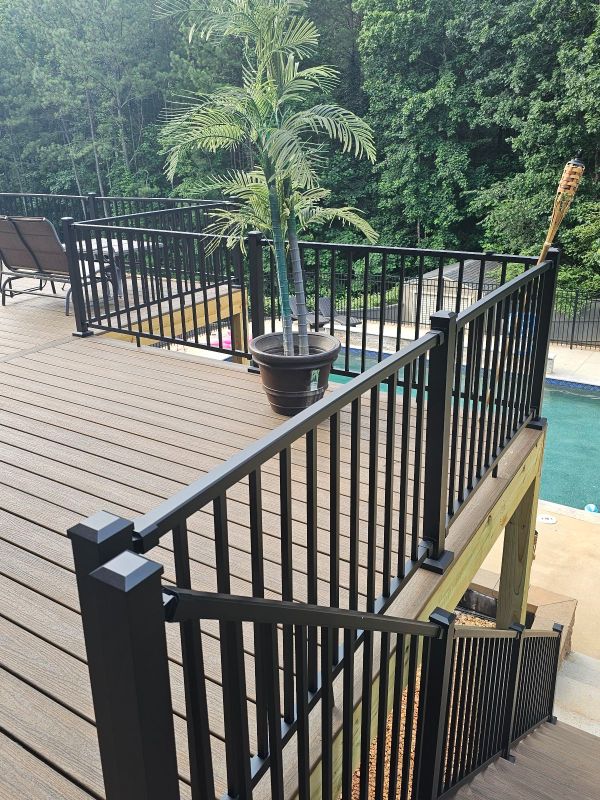
A Deck Has More Than One Lifespan
Homeowners often ask how long “the deck” lasts as if it were one material. In reality, the visible boards, railings, stairs, structural frame, footings, hardware, and house connection can age at different rates.
Composite boards may remain serviceable long after a poorly protected wood frame develops problems. Conversely, a well-built and well-drained frame may be suitable for resurfacing after the original wood boards reach the end of their useful life. That is why age alone does not determine whether a deck needs repair or replacement.
How Long Can a Wood Deck Last?
Pressure-treated wood is commonly associated with a service life around 10 to 20 years, but the range is broad. A deck with good drainage, appropriate ground clearance, correct flashing, compatible hardware, and regular protective maintenance can perform much differently from one that stays shaded, collects leaves, or receives concentrated roof runoff.
The surface is usually where weathering appears first: checking, splitting, raised grain, fading, fastener movement, and isolated decay. Those signs do not automatically mean the frame has failed, but they should trigger a closer look.
Professional deck staining and preparation can help protect appropriate wood surfaces. Stain cannot restore wood that is already decayed or structurally damaged.
How Long Can Composite Decking Last?
Many capped composite manufacturers offer limited residential warranties ranging from 25 to 50 years depending on the product line. Warranty length is not the same as a promise that every part of a deck will last that long. Coverage, exclusions, installation requirements, fading thresholds, transfer rules, and labor terms should be reviewed for the exact product.
Composite boards resist rot and splintering at the surface, but they can still become dirty, scratched, stained, or hot. More importantly, the wood frame below still requires sound construction and water management.
When considering composite, compare the complete system in our wood versus composite guide for Georgia homes.
What Shortens Deck Life in Georgia?
- Trapped moisture: leaves, planters, rugs, poor drainage, and slow-drying shade can keep surfaces damp.
- Failed flashing: water entering behind the ledger can damage both the deck connection and the house.
- Roof runoff: concentrated water from missing or poorly directed gutters can repeatedly soak the same areas.
- Sun and heat: ultraviolet exposure contributes to fading, checking, and finish breakdown.
- Incompatible hardware: corrosion can weaken hangers, fasteners, and connectors.
- Ground contact and poor ventilation: wood that remains close to soil or enclosed without drainage dries more slowly.
- Delayed repairs: a small water or railing problem can affect adjacent components when ignored.
How to Help a Deck Last Longer
- Remove leaves, pine straw, pollen, and debris from the surface and between boards.
- Keep gutters and downspouts working and route discharge away from supports and foundations.
- Follow the deck-board manufacturer’s cleaning and care instructions.
- Maintain wood finishes before the coating fails extensively.
- Address loose boards, protruding fasteners, rail movement, and stair damage promptly.
- Keep soil, mulch, and vegetation away from vulnerable framing and post bases.
- Arrange an evaluation when movement, soft wood, corrosion, or water staining appears.
Maintenance should protect the deck without damaging it. Excessive pressure washing, aggressive chemicals, and sanding composite products can harm surfaces or affect warranties.
Does an Old Deck Automatically Need Replacement?
No. A deck’s condition, not birthday, decides the appropriate work. An older deck with a sound structure may be repairable or suitable for resurfacing. A newer deck with improper attachment, water intrusion, or serious construction defects may need major correction.
Ask whether deterioration is isolated or widespread, whether the cause can be corrected, and whether the remaining structure is compatible with the desired upgrade. If a roof, expansion, or heavy feature is planned, the evaluation must consider the new load—not just the current deck.
Use our repair, resurface, or replace guide to understand the three paths.
When to Have an Older Deck Evaluated
Arrange an evaluation when the deck develops soft spots, recurring board failure, loose rails, damaged stairs, unusual bounce, visible sagging, post movement, ledger gaps, corrosion, or persistent water staining. A professional check is also sensible before buying a home with an older deck or adding significant new features.
NADRA promotes routine deck inspections because deterioration can occur gradually and building standards change. A good evaluation reviews the structure as a system and explains which conditions are maintenance items, repair needs, or replacement concerns.
Frequently asked questions
Can a wood deck last 30 years?
Some well-built and carefully maintained wood decks can remain serviceable for decades, but that is not a universal expectation. Exposure, species, treatment, drainage, framing, hardware, and maintenance determine actual condition.
Does composite decking last longer than wood?
Many capped composite products are designed for longer surface life and carry longer limited warranties than typical wood decking. The frame and connections below the boards still need proper construction and maintenance.
Should a 20-year-old deck be replaced?
Not based on age alone. It should be evaluated for structural condition, connections, flashing, corrosion, stairs, guards, and the extent of deterioration. Repair, resurfacing, or replacement may be appropriate depending on the findings.
Does staining extend a deck’s life?
A properly prepared and applied finish helps protect suitable wood from moisture and sunlight. It does not repair decay, structural damage, or failed connections.
What is the biggest threat to deck lifespan in Georgia?
Water that is not managed well is one of the most important threats. Failed flashing, roof runoff, trapped leaves, slow-drying shade, ground contact, and poor drainage can all keep wood wet and accelerate deterioration.
Sources and further reading
Understand the condition of your existing deck
Upperdeckz can evaluate aging boards, framing, stairs, railings, drainage, and visible connections, then explain practical maintenance, repair, resurfacing, or rebuilding options.
Request a Free Estimate Call 678-910-4046