Quick answer
Yes, an existing wood frame can sometimes be resurfaced with composite decking. The frame must be structurally sound, properly supported and connected, adequately flashed, reasonably flat, and spaced according to the selected board manufacturer’s installation instructions. Old decking should be removed so hidden decay, corrosion, water damage, and framing problems can be identified. If the structure is compromised, a rebuild may be safer and more economical than extensive correction.
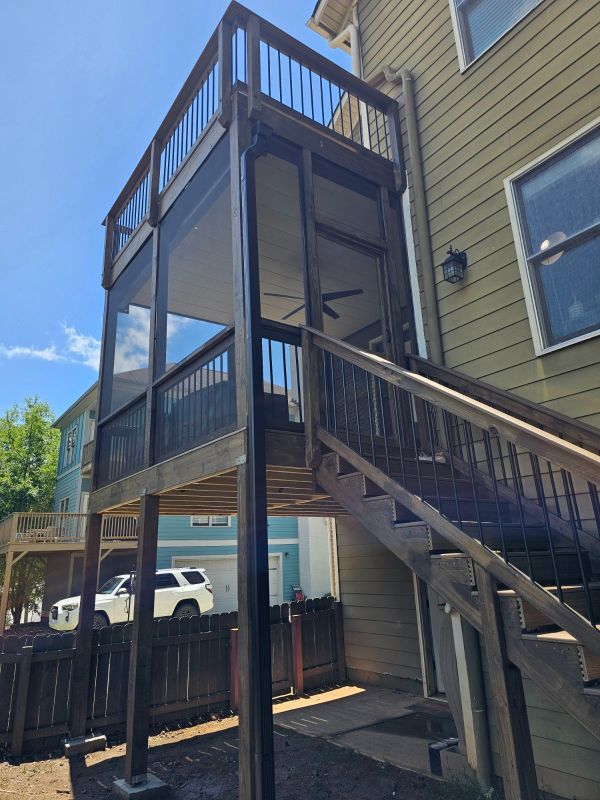
Why Composite Resurfacing Is More Than a Board Swap
The visible boards are only the finish layer. Once they are removed, the joists, beams, ledger, flashing, hangers, fasteners, posts, and footings become part of the decision. New composite can provide a long-lasting surface, but it should not conceal a frame near the end of its life.
Resurfacing is most successful when the existing layout still works, the structure was built and maintained well, and corrections are limited. A deck with widespread damage may consume so much repair labor that rebuilding becomes the clearer long-term value.
What Must Be Inspected Before Reusing the Frame
- Ledger and flashing: verify the house attachment, fasteners, water management, and surrounding wall condition.
- Joists and beams: look for decay, cracks, unauthorized cuts, sagging, over-spans, and damage at connections.
- Posts and footings: check for movement, deterioration, settlement, and inadequate bases.
- Hardware: evaluate hangers, bolts, screws, nails, brackets, and corrosion compatibility.
- Stairs and rail framing: determine whether they can support the proposed new system.
- Drainage and ventilation: identify areas where water or debris has been trapped.
Some conditions cannot be fully seen until the old surface is removed. A responsible proposal should explain how concealed damage will be handled if discovered.
Joist Spacing and Frame Flatness Must Match the Product
Composite boards are installed according to manufacturer instructions that specify joist spacing, stair-stringer spacing, end support, gapping, fastening, and special requirements for diagonal layouts. The correct spacing can vary by brand, line, board profile, and installation angle.
An old frame may have joists farther apart than the new product allows or may have crowns and low spots that create a visibly uneven surface. Corrections can include adding joists, sistering, blocking, planing limited high areas where appropriate, or replacing damaged components.
Do not select boards first and assume they will fit any existing frame. Product and framing must be planned together.
Use the Open Frame to Improve Water Management
Removing the deck boards is a valuable opportunity to correct flashing and protect vulnerable framing before the new surface is installed. The house connection, joist tops, beam interfaces, stair framing, and areas below roof runoff deserve special attention.
Joist tape or compatible flashing products may be considered as part of the system, but they do not repair decayed wood or substitute for proper ledger flashing. Materials must be compatible with treated lumber and the selected decking system.
If the space below will become a patio or outdoor room, plan underdeck drainage and ceiling options before closing the surface.
Stairs and Railings Need Their Own Evaluation
A resurfaced deck often looks best with updated railings and stair treads, but those changes affect more than appearance. Guard posts require strong connections to the frame. Composite stair boards may require different stringer spacing than the old wood treads. Landings, handrails, lighting, and bottom supports must remain safe.
Mixing new boards with old railings can also create inconsistent remaining life. Compare the cost and future maintenance of keeping, repairing, or replacing each system now.
When the Existing Frame Should Not Be Reused
Resurfacing is usually not the right choice when decay is widespread, the ledger or house connection is compromised, supports have moved, hardware is extensively corroded, the frame is substantially out of plane, or major changes are needed to height, size, stairs, or load.
A proposed roof, hot tub, outdoor kitchen, or enclosure can require a structure designed specifically for those loads. Keeping an inadequate frame simply because the boards are already removed does not create value.
See the full comparison of deck repair, resurfacing, and replacement.
A Responsible Composite Resurfacing Process
- Discuss the desired decking, railing, stair, lighting, and underdeck features.
- Perform a preliminary evaluation of the visible structure.
- Confirm permit and code requirements for the jurisdiction.
- Remove the old boards without covering concealed conditions.
- Complete a detailed frame, connection, and water-management review.
- Repair or reinforce only where the remaining structure is appropriate to reuse.
- Install the selected system according to current manufacturer instructions.
- Complete required inspections, cleanup, and care documentation.
Upperdeckz can evaluate whether a deck repair and resurfacing plan or a new custom deck better fits the existing conditions.
Frequently asked questions
Can composite decking go directly over old wood boards?
It should not be installed as a cover over deteriorated decking. Removing the old boards allows the frame to be inspected and gives the new product the support, spacing, drainage, and fastening conditions it requires.
Does an old frame need additional joists for composite?
It may. Joist and stair-stringer spacing must follow the selected manufacturer’s instructions and may vary by product and installation angle. Existing flatness and condition also matter.
Can the existing wood railing stay?
Sometimes, if the railing, posts, connections, and surrounding framing are sound and compliant. Compare its condition and remaining life with the new surface before deciding.
Is composite resurfacing cheaper than rebuilding?
It can be when the frame is sound and corrections are limited. Extensive decay, spacing changes, structural reinforcement, or layout changes can reduce or eliminate the savings.
What happens if damage is found after boards are removed?
The contractor should document the condition, explain required corrections, and follow the agreed change process. Significant concealed damage may change the recommendation from resurfacing to broader rebuilding.
Sources and further reading
Find out whether your frame is worth keeping
Upperdeckz can evaluate your existing deck, compare resurfacing with rebuilding, and plan compatible composite, railing, stair, and water-management options.
Request a Free Estimate Call 678-910-4046